

Read the Full Article on New York Post - Click Here
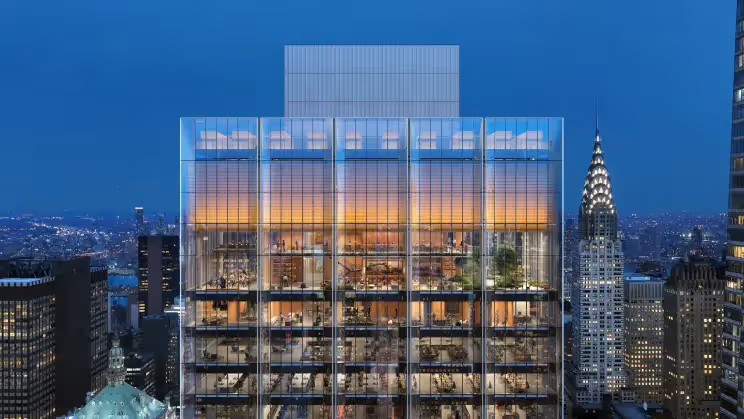
Despite elevated vacancy rates and post-pandemic uncertainty, Manhattan is seeing a resurgence in office-tower development. Developers and brokers alike believe high-quality, modern office space in prime locations will be in short supply—prompting new projects to break ground now.
Because the vacancies are mostly in older, less competitive buildings. Developers expect a scarcity of high-quality, modern office space in prime locations as the recovery unfolds.
Large corporations and global firms are seeking premium space to maintain brand, culture and productivity—especially in the most desirable neighborhoods.
Primarily in Manhattan’s high-value corridors—districts where companies still want to locate and where zoning/land cost can support new supply.
Knakal emphasises that the future of commercial office real estate in NYC is being shaped by two forces: (a) conversion of obsolete office space into residential or mixed-use and (b) new, modern office buildings with three-dimensional advantages (amenities, sustainability, location).
Many will face increased vacancy, downward pressure on rents, or be forced to convert to other uses (residential, hotel, lab) to remain viable.
While bright spots exist, this is a selective recovery. The overall office market remains challenged, but segments—new construction in prime locations—are positioned to thrive.

Get tailored industry and listing news, Map Room, and Bob Knakal's insights in your inbox!

Follow us on


