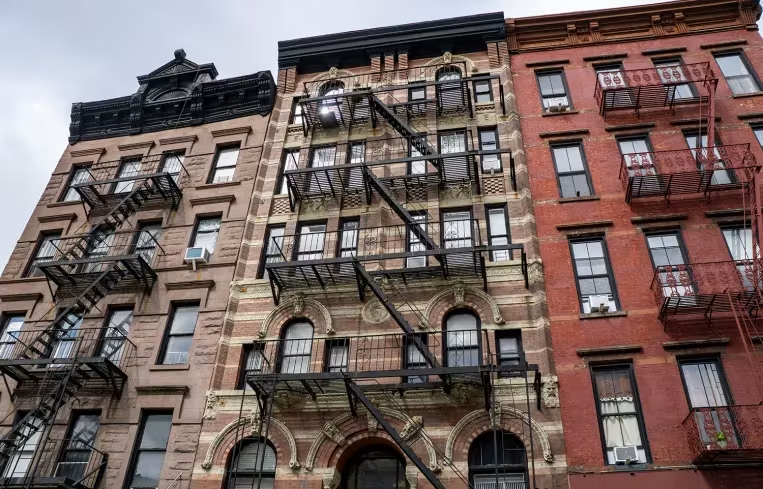
New York City’s housing affordability crisis isn’t just about high rents—it’s about policy gridlock. In his latest Concrete Thoughts column, Bob Knakal, Chairman & CEO of BKREA, lays out a roadmap for meaningful reform that challenges entrenched political practices and proposes bold structural changes to unlock supply, improve quality, and bring rents down.
Why NYC Housing Is Broken
Political self-preservation over housing needs: Elected officials avoid new housing supply because it brings in new voters, which they see as a political risk.
Rent regulation inertia: Families remain stuck in units that don’t fit their needs while countless vacated rent-regulated apartments sit “nailed shut.”
Outdated policy tools: Programs that once spurred billions in private investment (MCI, IAI, and 421a) have been gutted or replaced with ineffective alternatives.
Once reduced NYC’s housing dilapidation rate from 14% (1970s) to 0.04% (2019).
Immediate restoration could trigger tens of thousands of gut renovations, returning supply to market and creating jobs.
Bring Back 421a Tax Abatement (Scrap 485x)
Current 485x program is producing only small-scale projects.
Rolling back excessive wage mandates would create more construction jobs and more units.
End “Member Deference” in City Council
Local council veto power stalls housing.
Proposed fix: citywide decision-making or enforce a 5% minimum new construction quota per district annually.
Mandate Higher Replacement Rates
NYC adds <1% of units annually.
Other U.S. cities replace ~7.5% per year.
More new supply is critical to stopping runaway rents.
Double FAR (Floor Area Ratio) for Rentals with Perpetual Deed Restrictions
Incentivizes developers to build long-term rental housing, not just condos.
Could spark a surge in rental construction across the city.
Reframe Labor’s Role
Excessive wage requirements backfire by reducing jobs.
A more balanced approach could grow both union employment and housing supply.
The Bottom Line
Knakal argues that without bold reform, NYC rents will continue to skyrocket—already hitting $150 per square foot for new Manhattan apartments. But with targeted changes to terms, incentives, and zoning, the city could see a construction boom that stabilizes rents and modernizes housing stock.
Frequently Asked Questions
Q: Why does Bob Knakal criticize 485x?
A: He sees it as a compromise program that tries to please everyone but fails to deliver meaningful new housing.
Q: How would restoring MCI and IAI help renters?
A: By reopening thousands of shuttered units, boosting supply, and improving building quality, which would put downward pressure on rents.
Q: What does “doubling FAR for rentals” mean?
A: Allowing developers to build bigger rental projects if they commit to keeping them rental forever—making long-term rental development financially viable.
Q: What’s wrong with “member deference”?
A: It allows local council members to block new housing, even if the project benefits the city overall.